

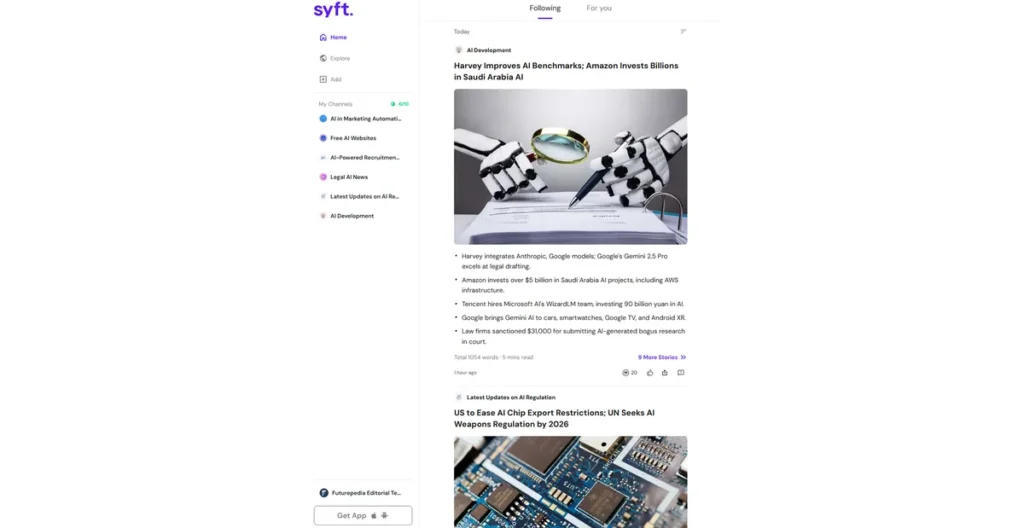
What is Syft?
Syft is an AI-powered information retrieval and processing system designed to streamline content consumption. From a technical standpoint, it operates as a sophisticated content aggregation platform that leverages machine learning algorithms to parse, summarize, and deliver targeted information based on user-defined parameters. The primary function of the application is to reduce the signal-to-noise ratio inherent in modern digital media. For professionals, developers, and strategists who rely on timely and accurate data, Syft serves as an automated intelligence-gathering tool, filtering vast quantities of information from global sources into a concise, actionable format. It effectively transforms raw, unstructured data from news articles and updates into structured, digestible summaries tailored to specific professional interests.
Key Features and How It Works
Syft’s architecture is built around several core components that deliver its personalized content experience. Understanding these from a technical perspective reveals the platform’s capabilities.
- AI-Powered Summaries: At its core, Syft employs advanced Natural Language Processing (NLP) and Natural Language Generation (NLG) models. These algorithms process source articles to generate abstractive summaries, creating new sentences that capture the essence of the original text rather than simply extracting key phrases. This results in more coherent and readable takeaways, a significant step up from basic summarization techniques.
- Customizable Channels: This feature functions as a user-defined filtering and topic modeling system. Users essentially construct personalized API queries against Syft’s indexed database of global content. Each channel represents a persistent query that continuously pulls and processes new information matching specific keywords, topics, or sources. The technical challenge lies in maintaining high relevance and precision for these dynamic content streams.
- Language Support: The platform incorporates a sophisticated translation and Natural Language Understanding (NLU) pipeline. This is more complex than simple text translation; the system must comprehend the source material’s context before summarizing it accurately in the target language. This feature highlights a robust, multi-lingual processing capability, crucial for a global user base.
- Global Sourcing: Syft relies on a resilient and scalable data ingestion pipeline. This system is engineered to scrape, parse, and normalize content from a wide array of heterogeneous sources worldwide. Managing this continuous data flow while ensuring data integrity and deduplication is a substantial engineering effort that provides users with diverse, comprehensive perspectives.
Pros and Cons
From a software development and implementation perspective, Syft presents a clear set of advantages and limitations.
Pros
- Efficient Information Filtering: The platform excels at its primary function: abstracting the complexity of sourcing and parsing information. It delivers a clean, high-value data stream that saves significant time.
- Scalable Personalization: The ability for users to define their own content channels indicates a flexible and well-architected backend capable of handling numerous, distinct data queries simultaneously.
- Strong Privacy Posture: The commitment to not selling user data to third parties is a critical differentiator. This suggests a more secure and ethical data handling policy, which is a major consideration for professional users and organizations.
- User-Friendly Interface: Despite the complex processing happening on the backend, the client-side application is intuitive, minimizing the learning curve and making the technology accessible.
Cons
- Initial Configuration Overhead: The process of defining and refining channels requires an initial time investment. From a UX perspective, this friction could be reduced with more sophisticated onboarding algorithms or AI-driven channel suggestions.
- Limited Integration Capabilities: The current platform lacks a public API or native integrations with common enterprise tools like Slack, Teams, or data visualization dashboards. This limits its utility as a component in a larger, automated workflow.
- Beta Phase Restrictions: The limitation of 10 free channels during the beta phase, while understandable from a business standpoint, may constrain power users who need to monitor a broader range of topics.
Who Should Consider Syft?
Syft is engineered for professionals who treat information as a critical asset and require efficiency in its acquisition.
- Software Developers and Engineers: Can create channels to monitor specific technologies, programming languages, security vulnerabilities, and API updates from relevant technical blogs and news sites.
- Market Intelligence Analysts: Require a tool to automate the tracking of competitor movements, industry trends, and regulatory changes from a curated list of global sources.
- Product Managers: Can leverage Syft to aggregate user feedback, feature requests from tech forums, and market sentiment analysis from various publications, consolidating research into a single feed.
- Technical Founders and Entrepreneurs: Need to stay informed about a wide range of topics—from fundraising news and market analysis to new technology stacks—with minimal time expenditure.
Pricing and Plans
Syft operates on a subscription model. The details for the entry-level plan are as follows.
- Bronze Plan: €19 per month. This plan provides access to the platform’s core features, including AI-powered summaries and the ability to create and manage personalized content channels.
Disclaimer: This pricing information is based on the data available at the time of writing. For the most current and comprehensive details, please refer to the official Syft website.
What makes Syft great?
Syft’s greatest strength lies in its advanced AI summarization engine, which effectively condenses complex information from diverse global sources into digestible, relevant insights. This core competency is what elevates it from a simple news aggregator to a genuine intelligence tool. It successfully tackles the problem of information overload by not just filtering content but actively processing and refining it for the end-user. The platform’s technical implementation focuses on delivering high-relevance summaries, supported by a robust multi-lingual backend and a clear, privacy-first data policy. This combination of intelligent processing, deep personalization, and a commitment to user data security makes it a powerful and trustworthy tool for any professional looking to optimize their information intake and stay ahead of the curve.
Frequently Asked Questions
- How does Syft’s AI ensure summary accuracy and avoid introducing bias?
- Syft’s AI models are trained on vast datasets to identify and extract factual information. While all AI summarization carries a risk of interpretation error, the platform likely uses validation techniques and relies on reputable sources to maintain a high degree of accuracy and neutrality in its summaries.
- Are there plans for an API to integrate Syft’s data streams into other applications?
- While a public API is not currently available, it’s a logical next step for a platform of this nature. An API would allow developers to pipe summarized data into internal dashboards, team communication channels, or other business intelligence tools, significantly expanding its use cases.
- What types of data sources does Syft aggregate content from?
- Syft aggregates information from a wide range of trusted global sources, including major news outlets, industry-specific publications, technical blogs, and academic journals. The focus is on providing diverse and reliable perspectives on any given topic.
- How is user data handled to maintain the platform’s privacy-focused stance?
- Syft’s privacy policy states that user data is not sold to third parties. Personalization data, such as the channels you create and the topics you follow, is used exclusively to improve the service and tailor the content delivered to you. All data is handled under strict security protocols.