

What is Flowable?
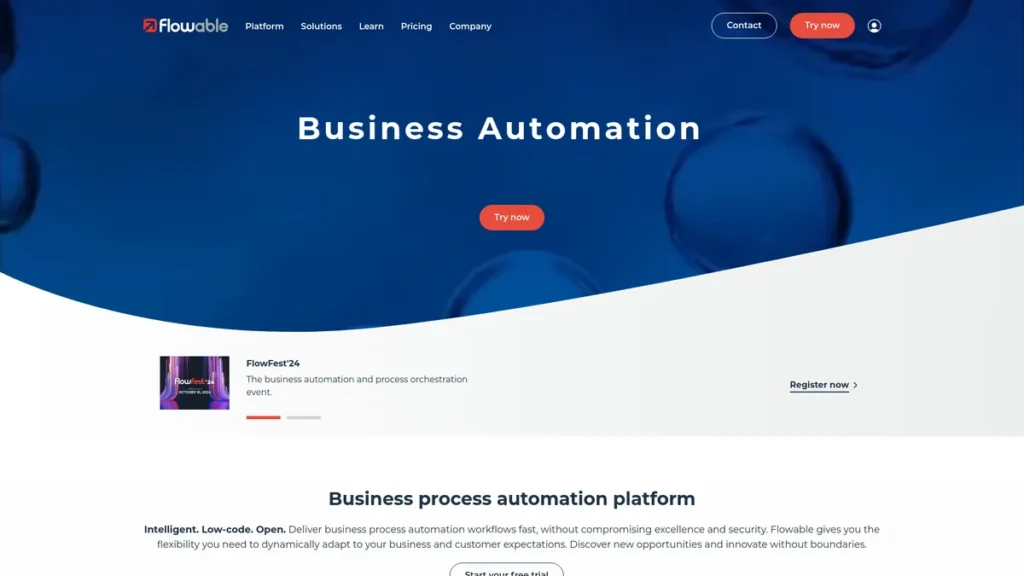
In the world of business, repetitive tasks are silent profit killers. Flowable is a business process automation (BPA) platform designed to tackle this problem head-on. It’s an intelligent, low-code system that allows businesses to map out, automate, and optimize their operations without needing a dedicated team of software developers. Think of it as a digital toolkit for building custom workflows for everything from client onboarding to supply chain management. By using open standards, it aims to provide a flexible and scalable solution that can grow with your company, rather than locking you into a rigid, proprietary system. It’s particularly suited for businesses with complex, multi-step processes that need to adapt to changing market demands.
Key Features and How It Works
Flowable’s power lies in its ability to model and execute complex business logic. It provides a visual interface where you can design processes, define decision rules, and manage cases, all with minimal coding. This approach significantly lowers the barrier to entry for creating powerful, custom applications.
- Intelligent Automation: This isn’t just simple task automation. Flowable combines case, process, and decision models to handle sophisticated scenarios. Think of its intelligent automation like an experienced restaurant manager who knows exactly when to order more supplies, adjust staff schedules for a holiday rush, and alert the chef to a VIP customer’s arrival—all automatically based on preset rules and incoming data. It makes smart, context-aware decisions to keep operations running smoothly.
- Low-Code Development: For a small business owner, the term ‘enterprise-grade application’ often sounds expensive. Flowable’s low-code environment means your business experts—the people who actually understand the workflows—can build and modify applications themselves. This dramatically cuts down on development time and cost, allowing you to react quickly to new opportunities.
- Open Architecture: Flowable is built on open standards, which means it plays well with others. You can integrate it into your existing IT infrastructure without being tied to a single vendor. This provides long-term flexibility and prevents the costly problem of being stuck with a tool that no longer fits your needs.
- AI-Enhanced Capabilities: The platform can incorporate AI to augment human decision-making. This could mean flagging unusual transactions for review or suggesting the next best action in a customer service case, helping your team make faster, more accurate decisions.
Pros and Cons
Every tool has its trade-offs, and it’s crucial to understand them in terms of real-world impact on your business.
Pros:
- Tangible Efficiency Gains: By automating manual processes, you reduce errors and free up your team to focus on high-value work, directly impacting productivity and your bottom line.
- Reduced IT Overhead: The low-code approach minimizes reliance on specialized developers, lowering both hiring costs and project timelines.
- Adaptability: Its open architecture allows the platform to change as your business evolves, protecting your initial investment.
- Empowered Teams: It enables non-technical staff to build their own solutions, fostering a culture of innovation and problem-solving within your company.
Cons:
- Initial Time Investment: While powerful, the platform is not a simple plug-and-play tool. Expect a learning curve as your team gets familiar with its extensive features.
- Integration Complexity: Connecting Flowable to older, legacy systems can be challenging and may require technical assistance, adding a potential hidden cost.
Who Should Consider Flowable?
Flowable is best suited for businesses that have outgrown simple task automators like Zapier and require a more robust solution for core business processes. If your operations involve complex approval chains, multi-stage client onboarding, compliance documentation, or intricate case management, this platform is worth investigating. While it serves large enterprises in finance, healthcare, and manufacturing, a small or medium-sized business with significant operational complexity can also see a substantial return on investment. If your team is constantly bogged down by manual data entry, endless email chains for approvals, and processes tracked on spreadsheets, Flowable offers a pathway to structured, scalable efficiency.
Pricing and Plans
Detailed pricing information for Flowable’s enterprise solutions was not publicly available. The company offers custom pricing based on the specific needs, scale, and deployment model of an organization. A free trial is typically available to allow prospective users to evaluate the platform’s capabilities. For the most accurate and up-to-date pricing, please visit the official Flowable website.
What makes Flowable great?
Flowable’s greatest strength is its combination of low-code accessibility with high-ceiling power for complex, end-to-end automation. This unique blend makes it an incredibly versatile platform. Unlike simpler tools that hit a functionality wall, or heavyweight enterprise systems that require a team of engineers, Flowable occupies a valuable middle ground. It allows a business to start by automating a single, painful process and then scale up to orchestrate entire departmental operations without ever having to switch platforms. This adaptability, built on an open and flexible architecture, is what truly sets it apart for businesses looking for a long-term automation partner.
Frequently Asked Questions
- Do I need to be a developer to use Flowable?
- No, but it helps to be tech-savvy. Flowable is a low-code platform, meaning business analysts and process owners can design and build many applications using visual tools. However, for complex integrations or highly custom features, some development knowledge may be required.
- How is Flowable different from tools like Zapier or Make?
- Zapier and Make are excellent for connecting different web apps and automating simple ‘if-this-then-that’ tasks. Flowable is a more comprehensive platform designed for modeling, executing, and managing core business processes that are often far more complex, involving multiple steps, human decisions, and intricate business rules.
- Is Flowable secure enough for sensitive business data?
- Yes. Flowable is an enterprise-grade platform with robust security features designed to handle sensitive data. It offers fine-grained access control, data encryption, and audit trails to meet the compliance and security needs of industries like finance and healthcare.
- What kind of support is available if we run into issues?
- Flowable offers enterprise support plans as part of its commercial offerings. Additionally, it has a strong open-source community heritage, with extensive documentation, forums, and tutorials available online to help users navigate the platform and solve common problems.