

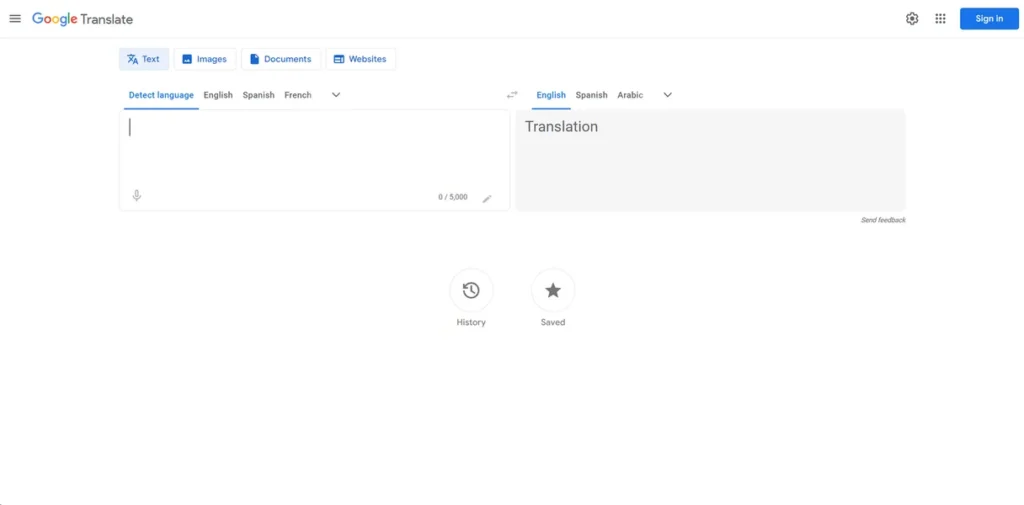
What is Google Translate?
For any small business eyeing global markets, communication is the first and most significant hurdle. Google Translate presents itself as a no-cost solution to this universal problem. It’s a machine translation service that processes text, voice, and images to provide instantaneous translations in over 100 languages. At its core, it’s designed to be a digital bridge, allowing a business owner in Ohio to understand a customer query from Osaka in seconds. While not a substitute for professional human translation, especially for critical documents, it serves as an indispensable first-line tool for daily international communications, preliminary market research, and breaking down initial language barriers without impacting your bottom line.
Key Features and How It Works
Google Translate operates on a sophisticated neural machine translation system, which analyzes the context of full sentences rather than translating word-by-word. This results in more natural-sounding, though not always perfect, outputs. From a business perspective, its features offer tangible operational benefits.
- Multi-Format Translation: It can handle typed text, spoken words, text within images captured by a camera, and even entire documents or websites. This versatility means you can translate an email from a potential supplier, understand a foreign competitor’s website, or even use your phone to decipher packaging information at a trade show.
- Real-Time Conversation Mode: This feature acts like having a basic, real-time interpreter in your pocket. The tool listens and translates a two-way conversation, displaying and speaking the results. It’s a powerful asset for initial client meetings or navigating travel in a foreign country, facilitating a level of interaction that would otherwise be impossible without a human interpreter.
- Image Translation (Google Lens): By pointing your device’s camera at a sign, menu, or document, the tool overlays the translation directly onto the image. For a business, this is incredibly useful for understanding foreign invoices, product manuals, or competitor marketing materials on the fly.
- Offline Access: For select languages, you can download language packs. This ensures you have basic translation capabilities even without an internet connection—a critical feature for international business travel where connectivity can be unreliable and expensive.
- API Integration: Businesses can integrate the Google Translate API into their own websites or applications, offering customers a built-in translation feature. This can significantly improve the user experience for a global customer base.
Pros and Cons
Evaluating Google Translate requires a pragmatic look at its strengths and weaknesses in a business context.
Pros:
- Zero Financial Barrier: The core service is completely free, offering immense value for startups and small businesses managing tight budgets.
- Unmatched Speed and Convenience: It delivers translations instantly across multiple platforms (web, iOS, Android), making it highly efficient for day-to-day tasks.
- Broad Language Support: With over 100 languages, it covers the vast majority of the world’s commercial markets.
- Simple, Intuitive Interface: No training is required. Its ease of use ensures that anyone in your organization can leverage it immediately.
Cons:
- Inconsistent Accuracy: The tool can struggle with nuance, idiomatic expressions, and complex industry-specific jargon. A mistranslation in a casual email is one thing; in a marketing campaign or client contract, it could be disastrous.
- Lack of Contextual Understanding: The AI doesn’t understand your business or brand voice, leading to generic or tonally inappropriate translations.
- Data Privacy Concerns: Text entered into the free version may be used by Google to improve its services. Sensitive business information should never be processed through the public tool.
Who Should Consider Google Translate?
Google Translate is a strategic asset for specific business roles and scenarios, provided its limitations are understood. It’s an excellent tool for:
- E-commerce Businesses: Ideal for providing initial customer support by translating incoming emails and messages from international buyers.
- Market Researchers: An effective way to get the gist of foreign news articles, competitor websites, and social media trends without commissioning expensive translations.
- Business Development Professionals: Useful for initial outreach emails and understanding replies from potential international partners before engaging professional services.
- Solopreneurs and Freelancers: A cost-effective way to communicate with a global client base on day-to-day project matters.
However, it is not suitable for legal, medical, or technical documents where precision is non-negotiable. For contracts, user manuals, or high-stakes marketing copy, investing in a professional human translator is essential to mitigate risk and protect your brand’s reputation.
Pricing and Plans
The consumer-facing Google Translate service, available via the web and mobile apps, is free to use. For businesses requiring integration into their own platforms, Google offers the Cloud Translation API, which operates on a usage-based pricing model. The cost depends on the volume of characters translated and the features used. For the most accurate and up-to-date pricing, please visit the official Google Translate website.
What makes Google Translate great?
Google Translate’s greatest strength is its sheer, unparalleled accessibility. Its integration into the wider Google ecosystem makes it a frictionless tool for any business already using Google Workspace. You can translate text directly within Gmail, Google Docs, and the Chrome browser, removing steps and saving valuable time. This ubiquity means that a powerful, if imperfect, translation tool is always just a click or a tap away. It democratizes international communication, providing small businesses with a level of global reach that was once the exclusive domain of large multinational corporations.
Frequently Asked Questions
- Is Google Translate accurate enough for business contracts or legal documents?
- Absolutely not. While useful for getting a general understanding, machine translation lacks the nuance and precision required for legally binding documents. Always use a certified human translator for such critical materials.
- How does the Google Translate API benefit a small business?
- The API allows you to embed translation capabilities directly into your website or app. This means an international visitor can, for example, read your product descriptions or FAQ page in their native language, which can significantly improve user experience and increase conversion rates.
- Does Google save the text I enter into the public translator?
- According to Google’s privacy policy, they may use data from the free service to improve their products. Therefore, you should avoid entering sensitive or confidential business information into the public web interface.
- Can Google Translate handle technical jargon or industry-specific terms?
- It often struggles. The tool’s accuracy diminishes significantly with specialized terminology. While it may recognize some common technical terms, it is unreliable for content requiring deep industry knowledge.