

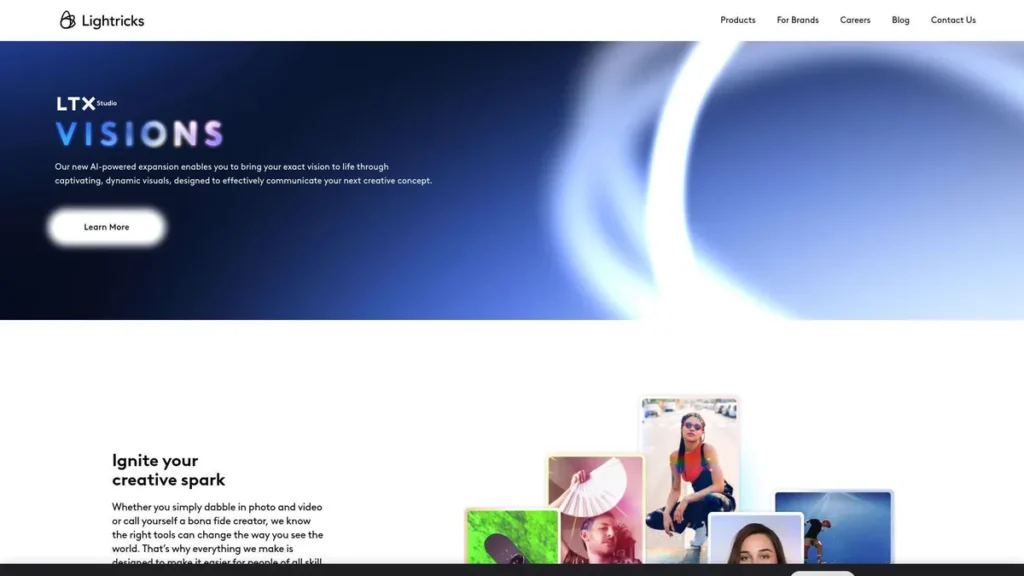
What is Lightricks?
From a technical standpoint, Lightricks is an ecosystem of creative applications built upon a foundation of advanced computer graphics and AI research. It provides a suite of tools designed to abstract complex image and video processing tasks into intuitive, user-facing applications. For developers and technically-minded professionals, Lightricks represents a powerful, vertically integrated stack that handles intensive computational tasks—from generative AI to algorithmic video editing—on the backend, delivering high-quality results through polished front-end interfaces. Its value proposition is not just in the creative output, but in the sophisticated engineering that makes that output accessible across multiple platforms.
Key Features and How It Works
Lightricks’ functionality is delivered through a series of purpose-built applications, each leveraging a core set of technologies. Understanding these components is key to evaluating its technical capabilities.
- AI-Powered Video Production: This feature leverages machine learning models to analyze video clips, identify key moments, and streamline the editing process. The engine likely performs tasks such as object tracking, scene segmentation, and automated color correction, reducing the manual overhead required to produce professionally sequenced content. The performance of these operations is highly dependent on both device hardware and backend server processing.
- Intuitive Photo Editing Apps: The suite offers a range of photo editors that serve as graphical user interfaces (GUIs) for a powerful image processing pipeline. Functions like object removal, background replacement, and style transfer are executed by sophisticated algorithms that require significant computational power, which is managed effectively by the application architecture.
- Real-Time Image Generation: This functionality utilizes generative adversarial networks (GANs) or diffusion models to synthesize images from text prompts or sketches. The ‘real-time’ aspect depends on optimized models and efficient server-side GPU allocation to minimize latency between user input and image output.
- Cross-Platform Compatibility: Lightricks maintains applications across iOS, Android, and desktop/web environments. This indicates a robust engineering effort to ensure a consistent user experience and state synchronization across devices, which is critical for any professional workflow. It allows users to start a project on one device and seamlessly continue on another.
- API Availability: For enterprise clients and developers, Lightricks offers API access. This allows for the integration of its core editing and generation technologies into third-party applications and automated workflows, enabling programmatic content creation and modification at scale.
Pros and Cons
Evaluating Lightricks from a software development perspective reveals clear advantages and potential limitations.
Pros
- High-Performance Backend: The quality of the output suggests a mature and powerful backend processing engine capable of handling complex computational tasks efficiently.
- Cohesive Ecosystem: Offering a suite of tools that work together simplifies workflows and reduces the friction often found when integrating multiple single-purpose applications from different vendors.
- API for Scalability: The availability of an API is a significant advantage for businesses looking to build custom solutions or automate content creation pipelines.
- Award-Winning Engineering: An Apple Design Award signals a high standard of software engineering, UI/UX design, and platform-specific optimization.
Cons
- Resource Intensity: The advanced AI and graphics processing can be demanding on local hardware, potentially leading to performance bottlenecks on older or less powerful devices.
- ‘Black Box’ Nature: While user-friendly, the high level of abstraction may limit the granular control that some technical users or developers might require for highly specific tasks.
- Subscription Dependency: The subscription model, while common, creates a dependency on the provider for continued access and updates, which is a consideration for long-term project planning.
Who Should Consider Lightricks?
Lightricks is engineered for a diverse set of users, but its technical strengths make it particularly suitable for specific professional cohorts.
- Software Developers & Tech Companies: Businesses that need to integrate robust media editing or AI generation features into their own platforms can leverage Lightricks’ API to accelerate development without building the core technology from scratch.
- Marketing Technology (MarTech) Teams: Professionals managing digital asset management (DAM) systems or automated ad campaign creation can use the toolset to programmatically generate and modify creatives at scale.
- Professional Content Creators: Individuals and teams who require a reliable, cross-platform creative suite that prioritizes high-quality output and workflow efficiency will find significant value.
- Digital Media Educators: Academic institutions can use the suite as a practical tool for teaching modern digital media creation, demonstrating the application of AI in a real-world context.
Pricing and Plans
Lightricks operates on a paid subscription model. While a free trial is often available to test the platform’s core functionalities, full access to the advanced feature set and premium tools requires a commitment. The pricing structure is designed to cater to individual creators and professionals who rely on these tools for their work.
- Pro Plan: Starting at $7.99 per month, this plan typically unlocks the complete suite of features, removes watermarks, and provides access to the full range of filters, effects, and AI capabilities.
For the most current and detailed pricing, including annual discounts or enterprise API access, it is best to consult the official Lightricks website.
What makes Lightricks great?
Tired of disparate creative tools with inconsistent APIs and workflows across platforms? The primary strength of Lightricks lies in its cohesive, vertically integrated ecosystem. The company’s commitment to translating its own academic research in computer vision and graphics into a unified suite of products provides a distinct technical advantage. For a developer or a tech-focused business, this means a reliable, single-vendor solution that ensures functional consistency from mobile to desktop. This integration simplifies development, streamlines support, and allows for the creation of complex, cross-platform workflows that would be difficult to assemble using multiple, disconnected third-party tools.
Frequently Asked Questions
- Does Lightricks offer a public API for its AI and editing tools?
- Yes, Lightricks provides API access for businesses and developers, allowing for the integration of its powerful media editing and generative AI technologies into custom applications and automated workflows.
- How does Lightricks handle data privacy and security for user content?
- Lightricks employs standard security protocols to protect user data and content. For enterprise-level or API-based integrations, specific data handling and privacy agreements are typically established to meet compliance requirements.
- What are the hardware requirements for optimal performance?
- While the apps are optimized for a range of devices, features like 4K video editing and real-time AI generation perform best on modern devices with powerful CPUs, ample RAM, and capable GPUs to avoid latency and ensure smooth operation.
- Can Lightricks integrate with other professional software like cloud storage or DAMs?
- Yes, the applications are designed with integration in mind, offering direct sharing to social media platforms and connectivity with major cloud storage providers. Custom integrations with systems like Digital Asset Management (DAM) platforms are often possible via their API.