

What is Photomath?
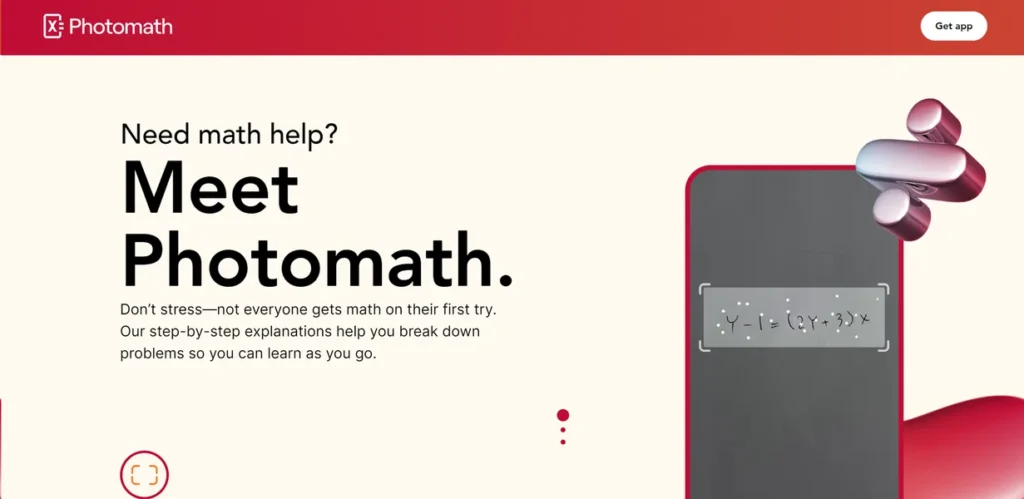
Photomath is an advanced educational application built upon a sophisticated computer vision and symbolic math engine. At its core, it functions as a high-powered parser and solver for mathematical expressions, capable of ingesting problems through a device’s camera. While designed for learners from elementary to university levels, its technical prowess makes it a remarkable utility for anyone who interacts with quantitative problems. It effectively translates visual mathematical notation—both printed and handwritten—into machine-readable data, processes it through a powerful back-end, and returns not just an answer, but a comprehensive, step-by-step execution trace of the solution.
Key Features and How It Works
From a technical standpoint, Photomath is an elegant integration of front-end user experience and back-end computational power. Its architecture is designed for accuracy, speed, and pedagogical value.
- Smart Scanning Technology: The app employs a finely-tuned Optical Character Recognition (OCR) engine specialized for mathematical symbols and structures. Think of it as a universal translator for mathematical notation; it converts the visual language of equations into a structured format its core engine can process, bridging the gap between the physical and digital worlds.
- Step-by-Step Solutions: This feature is powered by a solution-path generation algorithm. Instead of simply returning a final state, the engine traces the entire computational journey. For a developer, this is akin to a debugger’s stack trace for a math problem, revealing each logical step and transformation required to reach the final output.
- Multiple Solving Methods: The platform demonstrates significant algorithmic flexibility by often providing several valid pathways to a solution. This indicates a robust back-end capable of applying different mathematical theorems and strategies to the same input, catering to various analytical approaches.
- Interactive Learning: The front-end leverages the structured data from the solver to render dynamic visual aids and contextual tips. This isn’t just static text; it’s an interactive UI that helps users visualize and internalize the ‘how’ and ‘why’ behind the abstract logic of the solution.
Pros and Cons
Every powerful tool has its strengths and architectural trade-offs. Here’s a developer’s take on Photomath.
Pros
- High-Fidelity OCR: The accuracy of its scanning component is a significant technical achievement, reliably parsing a wide array of notations.
- Robust Solving Engine: The ability to handle everything from basic arithmetic to advanced calculus and statistics points to a scalable and comprehensive back-end infrastructure.
- Superior UX/UI: The front-end successfully abstracts away the immense complexity of the back-end processes, offering a clean, intuitive, and highly responsive user experience.
- Effective Freemium Model: A strong free tier provides immense value, acting as a testament to the core product’s reliability and serving as a frictionless entry point for users.
Cons
- Network Dependency: Key features rely on server-side processing, requiring a stable internet connection. This introduces potential latency and a critical point of failure.
- Closed Ecosystem: The lack of a public API or direct integration options limits its utility for developers looking to incorporate its solving capabilities into third-party educational platforms or workflows.
- Potential for Over-Reliance: As with any powerful automation tool, there is a risk of users leaning on it as a crutch, thereby circumventing the intended learning process.
Who Should Consider Photomath?
While its primary audience is clear, Photomath’s utility extends across several professional domains.
- Students and Educators: The core user base, using it to verify homework, debug problem-solving steps, and explore different solution methods.
- Parents: A valuable resource for assisting their children with quantitative subjects, even if their own skills are rusty.
- Engineers and Developers: An excellent tool for quickly verifying calculations, sanity-checking formulas, or understanding mathematical concepts encountered in technical papers and algorithm design.
- Technical Content Creators: Useful for creating and validating accurate mathematical examples and solutions for tutorials, courses, and documentation.
Pricing and Plans
Photomath operates on a freemium model, providing core functionality for free with advanced features reserved for subscribers.
- Free Tier: This plan offers robust access to the core feature set, including camera-based problem scanning and detailed step-by-step explanations with visual aids.
- Photomath Plus: This premium tier enhances the core product with deeper, AI-powered explanations and access to a massive library of textbook-specific solutions.
- Monthly Plan: Approximately $9.99 per month.
- Annual Plan: Approximately $69.99 per year, offering a cost saving over the monthly subscription.
Disclaimer: Prices are subject to change. For the most current pricing, please consult the official Photomath website or app store listing.
What makes Photomath great?
Ever found yourself reverse-engineering a complex algorithm or a dense mathematical proof with no documentation? Photomath excels by addressing a similar challenge: it doesn’t just provide an answer, it documents the process. Its primary achievement lies in the seamless integration of its user-friendly, high-fidelity OCR front-end with a powerful, education-focused symbolic math engine on the back-end. This transforms it from a simple calculator into a ‘decompiler’ for mathematical problems. It shows the ‘why’ behind the ‘what,’ a critical function for genuine learning and a feature that technical professionals can appreciate for its clarity and logical transparency.
Frequently Asked Questions
- How accurate is the scanning technology?
- The OCR is highly accurate for printed and clear handwritten text. However, its performance can degrade with very stylized handwriting, poor lighting, or unconventional mathematical notation.
- Does Photomath solve word problems?
- Its core strength is parsing and solving symbolic mathematics. While it has some capability to interpret simple word problems, it is not a full-fledged natural language processing engine. Complex problems requiring significant textual interpretation are a developing area.
- Can Photomath be integrated with other platforms via an API?
- Currently, Photomath does not offer a public API for third-party integration. It functions as a standalone application, though its utility makes it a powerful companion to other learning management systems (LMS) and educational tools.
- What are the limitations of its solving engine?
- Photomath covers a vast curriculum up to and including advanced calculus and statistics. However, it may have limitations with highly abstract, proof-based mathematics (e.g., topology, abstract algebra) or niche theoretical topics that fall outside standard educational scopes.