

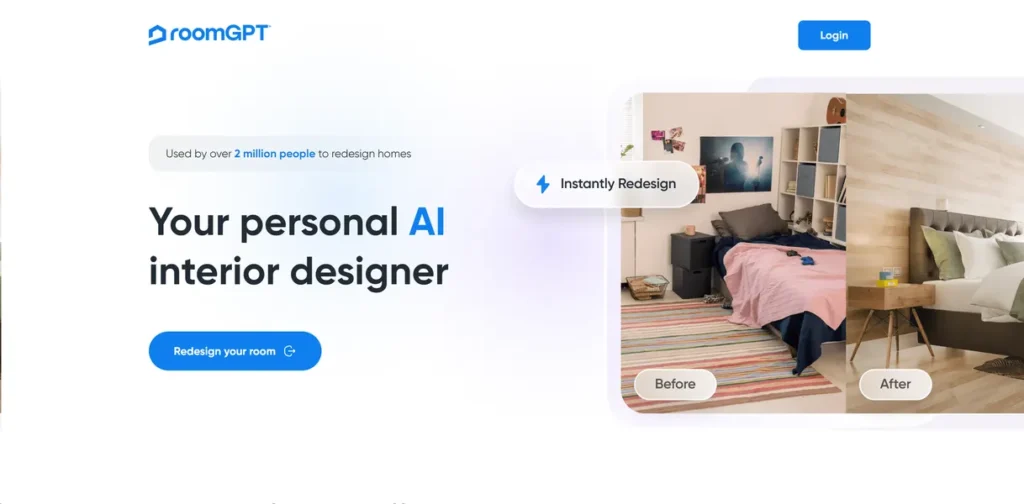
What is RoomGPT?
For any business where physical space is part of the product—be it real estate, hospitality, or design services—visualizing change is a constant challenge. RoomGPT enters the market as a pragmatic AI tool that acts as a digital interior designer. Its core premise is simple and powerful: upload a single photograph of any room, and its AI engine generates a variety of redesign concepts. This isn’t just a novelty; for a small business owner, it represents a significant reduction in the time and expense typically associated with professional mockups. It’s a tool designed to quickly bridge the gap between a client’s current space and its future potential, making it easier to secure buy-in and close deals.
Key Features and How It Works
RoomGPT’s operational model is built on efficiency, translating a complex creative process into a few simple steps. The workflow is direct: snap a photo, upload it, select a desired style, and receive AI-generated visualizations. This simplicity is key to its business value.
- AI-Powered Design Recommendations: At its heart, RoomGPT leverages a sophisticated AI to analyze the layout, lighting, and dimensions of your photo, suggesting design themes that are contextually appropriate.
- Photo-Based Room Transformation: This core feature acts like a digital swatch book for your entire room, not just a paint color. Instead of guessing how a ‘Modern’ or ‘Minimalist’ theme will look, the tool applies it to the user’s actual space, providing a tangible preview that eliminates costly guesswork.
- User-Friendly Interface: The platform is intentionally straightforward, requiring no specialized design software knowledge. This low barrier to entry means any team member, from a real estate agent to a marketing assistant, can produce professional-looking concepts in minutes, not hours.
- Global User Base: With over two million users, the tool has been pressure-tested across countless scenarios, providing a level of reliability that comes from widespread adoption.
Pros and Cons
From a business investment standpoint, RoomGPT presents a compelling but not flawless case.
Pros
- High ROI: The primary advantage is its cost-effectiveness. It drastically cuts down on expenses for staging consultations or graphic designer fees for mockups.
- Accelerated Timelines: The tool delivers design ideas almost instantly, helping to shorten sales cycles and client decision-making processes.
- Broad Applicability: Its utility extends beyond a single industry. Real estate agents can virtually stage listings, while boutique hotel owners can prototype room refreshes without physical changes.
- Enhanced Client Communication: It provides a concrete visual aid, ensuring that designers and clients are aligned on a concept before any real work begins.
Cons
- Output Depends on Input: The quality of the AI-generated designs is directly tied to the quality of the source photo. Poor lighting or clutter can compromise the final result.
- Interior Focus Only: The tool’s capabilities are strictly limited to interior spaces. Businesses needing exterior rendering or landscape design will need other solutions.
- Potential for Generic Results: While great for initial ideas, achieving a truly unique or branded look may require further refinement outside the tool.
Who Should Consider RoomGPT?
RoomGPT is not for every business, but for specific professionals, it offers a clear operational advantage.
- Real Estate Agents: An essential tool for marketing empty or dated properties. Virtual staging can significantly increase a listing’s appeal at a fraction of the cost of physical staging.
- Interior Designers: A powerful instrument for rapid ideation and creating initial client presentations. It helps visualize concepts quickly before investing time in detailed CAD drawings.
- Property Managers & Landlords: Useful for marketing rental units by showing prospective tenants how a space can be personalized and furnished.
- Small Retail and Hospitality Owners: For owners of cafes, small shops, or B&Bs, RoomGPT provides a low-cost way to experiment with interior updates to enhance customer experience.
Pricing and Plans
RoomGPT operates on a freemium model, allowing users to test its core functionality before committing financially.
- Free Plan: This entry-level tier provides basic access, allowing a business to evaluate the tool’s effectiveness with a limited number of design generations. It’s a no-risk trial to determine its fit for your workflow.
- Pro Plan: Priced at $9 per month, this plan is designed for professional use. It typically includes a higher number of design renders, access to a wider range of styles, and potentially higher-resolution outputs—features that are critical for client-facing materials. The monthly cost is a minimal operational expense when weighed against the cost of alternative design services.
For the most current plan details, visiting the official RoomGPT website is recommended.
What makes RoomGPT great?
How much time and money is wasted on design mockups that miss the mark? RoomGPT’s greatest strength is its ability to provide an immediate, visual, and affordable answer to the question, “What could this space look like?” It removes ambiguity from creative discussions, replacing abstract descriptions with concrete images. For a business, this translates directly into efficiency. It empowers professionals to show, rather than tell, their vision, leading to faster approvals, more satisfied clients, and a more streamlined design process. It democratizes a capability that was once reserved for those with large budgets or specialized skills.
Frequently Asked Questions
- How accurate are the AI-generated designs?
- The designs are conceptual visualizations intended for inspiration and style direction. Their accuracy depends heavily on the source photo’s quality. They are best used as a starting point, not as precise architectural blueprints.
- Can I specify particular furniture or brands in the redesign?
- Currently, RoomGPT focuses on applying overall themes and styles (e.g., Modern, Scandinavian). It does not allow for the selection of specific products from brands, but the generated visuals serve as a powerful guide for subsequent purchasing decisions.
- What is the key benefit of the Pro plan for a business?
- The Pro plan is built for commercial output. It provides the higher volume of renders, greater style variety, and improved image quality necessary for professional presentations and marketing materials. The Free plan is essentially a limited-feature trial.
- Are the images my business generates free to use commercially?
- Users should always consult RoomGPT’s latest terms of service regarding commercial usage rights for images generated on any plan, but paid tiers typically offer more permissive licensing for business purposes.