

What is Typeface?
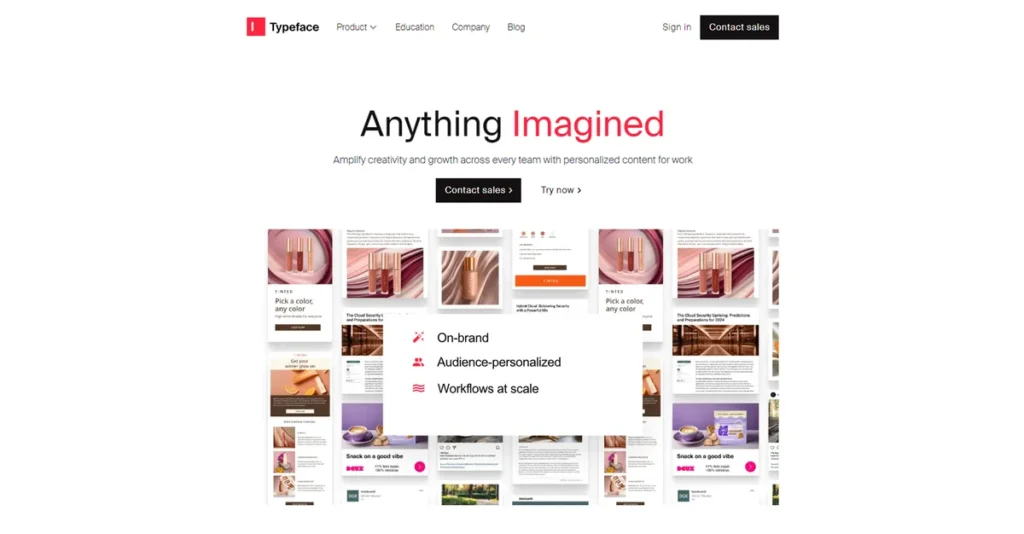
Typeface is an enterprise-focused generative AI application designed to function as a secure, scalable content generation layer within an organization’s existing technology stack. From a technical standpoint, it provides a unified platform that abstracts the complexity of interacting with multiple foundational AI models (for text, images, and more). Its core value proposition is the capability to fine-tune these models on an enterprise’s private data, including brand guidelines, existing content libraries, and product documentation. This process creates a proprietary, sandboxed model that ensures all generated content strictly adheres to the organization’s specific brand identity, tone, and style. For development and marketing teams, this translates to a reliable and predictable content pipeline that can be programmatically integrated into various workflows.
Key Features and How It Works
Typeface’s architecture is built around several core components designed for enterprise deployment. Understanding its functionality requires looking at how these pieces interoperate.
- Multimodal and Multi-Model Architecture: Typeface operates as an abstraction layer, providing access to a suite of best-in-class generative models through a single point of integration. This prevents vendor lock-in and allows enterprises to leverage the optimal model for a given task—whether it’s a Large Language Model (LLM) for copy or a diffusion model for images—without building and maintaining separate integrations.
- Deep Brand Personalization: This is a managed fine-tuning process. The platform ingests a corpus of an enterprise’s proprietary data to create a derivative model. This ensures generated content is not merely generic but reflects a deep, vector-based understanding of the brand’s voice. The resulting models are private to each customer, ensuring data isolation and competitive differentiation.
- Integrated Workflows via API: The platform is designed for headless implementation and seamless integration. It exposes robust APIs and likely utilizes webhooks to connect with existing enterprise systems such as Digital Asset Management (DAM), Content Management Systems (CMS), and Customer Relationship Management (CRM) platforms. This facilitates the automation of content creation directly within established operational processes.
- Secure Content Ownership and Governance: Security is a primary architectural consideration. Typeface utilizes private AI models, meaning customer data is not used to train public foundational models. All generated content is the intellectual property of the enterprise. The platform includes built-in checks and governance controls to enforce brand safety and compliance at scale.
- Templating Engine: The platform includes customizable templates that serve as pre-configured prompts and workflows. For developers, these can be seen as starting points for more complex API calls, simplifying the process of generating specific, recurring content formats like ad copy, product descriptions, or social media campaigns.
Pros and Cons
From a software development and integration perspective, Typeface presents a clear set of advantages and considerations.
Pros
- Reduced Technical Overhead: It provides a single, managed API for multiple generative AI models, simplifying development and maintenance.
- Deterministic Brand Voice: The fine-tuning process ensures a high degree of predictability and consistency in content output, which is critical for programmatic content generation.
- Enterprise-Grade Security: The commitment to private models, data tenancy, and content ownership addresses key security and compliance concerns for large organizations.
- Scalability: The platform is architected to handle high-volume content demands, supporting the needs of global marketing and sales operations.
Cons
- Data Dependency: The system’s output quality is directly proportional to the quality and volume of the input training data. Insufficient or inconsistent brand data will result in suboptimal performance (a classic GIGO scenario).
- Implementation Complexity: While the API may be well-documented, a full enterprise integration involving data ingestion, model tuning, and workflow connection requires significant technical planning and resources.
Who Should Consider Typeface?
Typeface is engineered for organizations that require more than a simple text generator. Its ideal user profile includes:
- Enterprise Technology Teams: Development teams tasked with building internal tools or automating content workflows who need a secure, reliable, and brand-aligned generative AI API.
- Large Marketing and Content Operations: Teams that need to produce a high volume of content across multiple channels while enforcing strict brand compliance programmatically.
- Organizations with High Security Requirements: Companies in regulated industries or those with significant intellectual property concerns who cannot risk data leakage to public AI models.
- Sales Enablement Teams: Professionals looking to integrate automated, personalized content generation into their CRM and sales outreach platforms at scale.
Pricing and Plans
As of this review, specific pricing and plan details for Typeface were not publicly available. This is typical for enterprise-grade solutions where pricing is often customized based on usage, number of users, and the extent of integration required. For the most accurate and up-to-date pricing, please visit the official Typeface website.
What makes Typeface great?
Struggling to maintain brand consistency when scaling content generation across multiple disparate APIs and platforms? This is the core architectural problem Typeface is engineered to solve. Its greatest strength lies in its function as a centralized governance and personalization layer on top of the rapidly evolving generative AI landscape. Instead of building and maintaining separate, brittle integrations with various model providers—each with its own security profile and output variability—Typeface offers a single, secure endpoint. This endpoint delivers content that is already fine-tuned to a specific brand’s nuanced voice. For developers and system architects, this transforms generative AI from a volatile, unpredictable component into a reliable, enterprise-ready service that enforces compliance and quality by design.
Frequently Asked Questions
- How does Typeface handle data security during model training?
- Typeface emphasizes a private AI approach. Your brand data is used to fine-tune a model for your exclusive use. This data is not co-mingled with other customers’ data or used to train public foundational models, ensuring strict data tenancy and security.
- What kind of API access and documentation does Typeface provide?
- As an enterprise-focused platform, Typeface provides comprehensive REST API access for integration into custom applications and existing workflows. This allows developers to programmatically generate text, images, and other content formats directly within their own systems, backed by detailed developer documentation.
- How does Typeface ensure the generated content is unique?
- The combination of leveraging the latest foundational models and fine-tuning them on your unique brand data significantly increases the originality of the output. The platform also includes content checks and safety filters to help ensure outputs are brand-safe and distinct.